
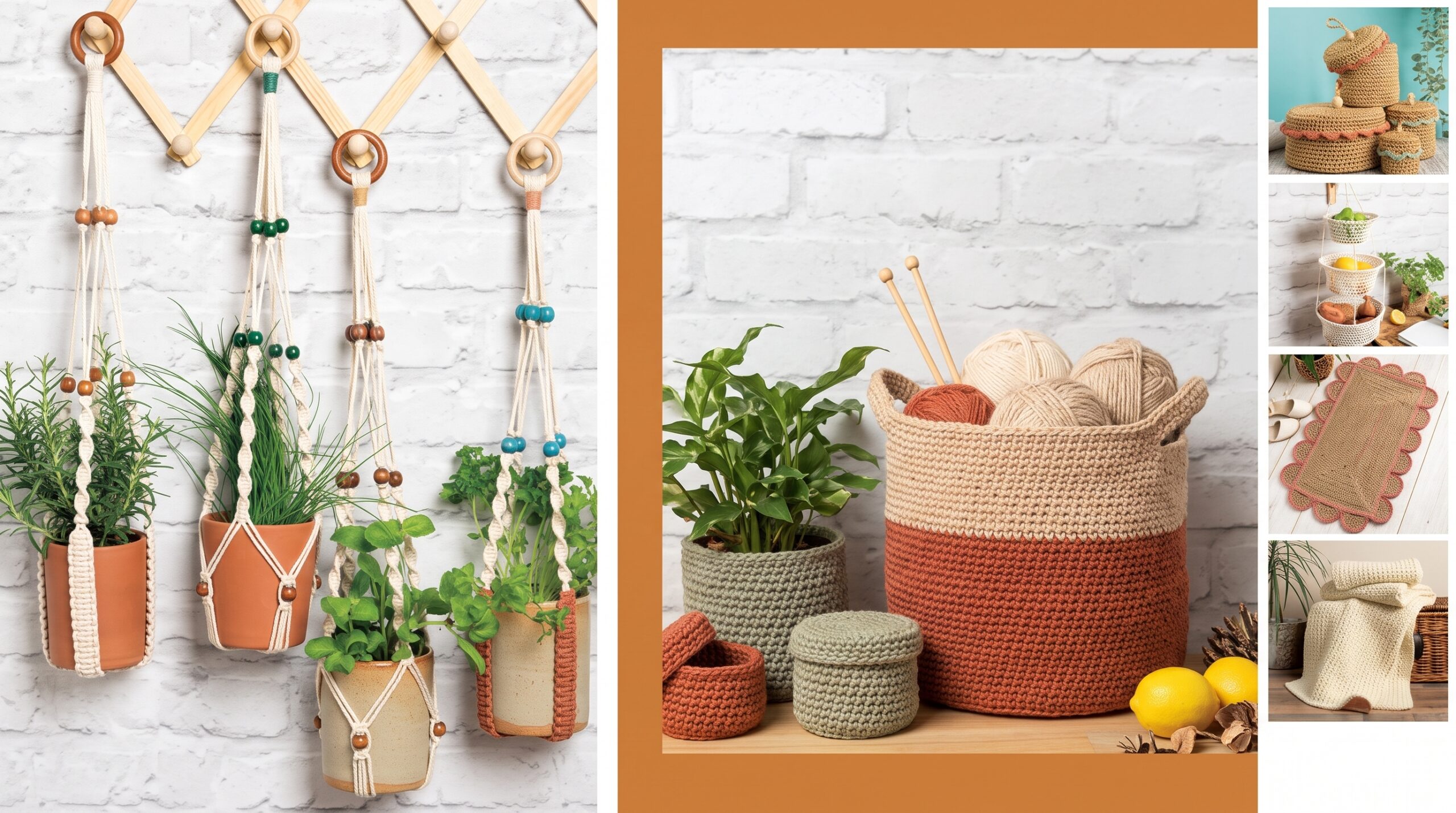
Finding a free crochet pattern is easy; choosing one you can actually finish with the yarn, time, tools, and skills you have is the harder part. A polished photo and a “beginner-friendly” label do not tell you whether the instructions match your terminology, whether you can access the full pattern, or whether the finished size suits your project.
This guide gives you a quick screening method, a practical fit score, and a pre-start checklist for choosing free crochet patterns without wasting yarn. It is about assessing patterns—not copying another designer’s instructions or promising that every free pattern is error-free.
At a glance: the five checks before you start
- Can you access the actual instructions? Confirm whether the full written pattern is free online, whether a video is available, and whether a printable PDF is paid or optional.
- Do the techniques match your current skills? Look at the stitch list and construction, not only the difficulty badge.
- Can you source the materials? Check yarn category, fiber, hook, notions, and total yardage.
- Does the pattern specify size and gauge? These are especially important for garments, blankets, and anything meant to fit a particular space.
- Is there enough support to troubleshoot? Look for a clear abbreviation key, photos, diagrams, video, stitch counts, and an update or errata note.
How to judge a “free crochet pattern” honestly
The word free can describe different things. Some designers publish the complete written pattern on a webpage and offer an optional paid ad-free PDF. Others share a free video while selling written instructions. Some pages show only a preview. Before committing, scroll or use the page contents to confirm what is actually available.
Check the original designer’s page, not only a social-media pin, roundup, or search snippet. A responsible link should identify the designer and send readers to their own instructions or video. Do not assume that a downloadable PDF is free just because the pattern is mentioned in a free-pattern list. Respect each creator’s copyright and terms: linking to a pattern is different from copying its text, photos, charts, or video into your own post.
A quick pattern-fit score: decide before buying yarn
Give the pattern one point for each “yes.” This is a simple decision aid, not a formal difficulty rating.
| Check | One point if… |
|---|---|
| Instructions | You can access a complete written pattern or a video that genuinely demonstrates the project. |
| Terminology | The pattern states US or UK terms and explains its abbreviations. |
| Techniques | You already know the key stitches or can find clear help for the unfamiliar ones. |
| Materials | You can get the correct kind of yarn, hook, and notions—or have a safe substitution plan. |
| Size and gauge | The finished dimensions and relevant gauge information are clear enough for your project. |
| Progress checks | There are stitch counts, row/round totals, photos, diagrams, or another way to confirm your work. |
| Support | The designer offers notes, a video, an FAQ, or a way to check updates and corrections. |
How to use the score: six or seven points is a strong candidate. Four or five may be fine if you are comfortable filling in the missing information. With three or fewer, pause and find another pattern or ask the designer a specific question before investing in materials. A high score does not guarantee a flawless pattern; it helps expose avoidable uncertainty.
Read the difficulty label—but verify the techniques
Skill labels are useful signals, but designers may use them differently. The Craft Yarn Council publishes project-level symbols and standard references; its crochet and knitting standards include yarn weights, abbreviations, and chart symbols. A pattern’s own technique list is still the most direct guide to what you need to do.
Before starting, check whether the pattern expects you to:
- work flat in rows or in joined/continuous rounds;
- make a magic ring, increase evenly, or keep a circle flat;
- change colors and carry, join, or weave in several ends;
- read a chart, use post stitches, clusters, lace repeats, or special stitches;
- shape a garment, sew pieces together, line a bag, or assemble separate motifs.
For a first project in a new technique, choose a pattern that introduces one new challenge at a time. For example, a small flat coaster can be a good place to practice a round and a color change; combining a new lace chart, multiple colors, and complex garment shaping in one project may create too many unknowns at once.
Check US vs UK crochet terms before row one
This is one of the most important checks when using patterns from different countries. Some stitch names differ between US and UK terminology: a US single crochet (sc) corresponds to a UK double crochet (dc); a US double crochet (dc) corresponds to a UK treble crochet (tr). Chains and slip stitches are named similarly, but never infer the system from the website’s language or location alone.
Look for a note such as “US terms” or “UK terms” near the pattern instructions. If none is given, inspect the designer’s abbreviation key or contact the designer before starting. The Craft Yarn Council crochet abbreviations reference is useful for standard US abbreviations; it does not replace the pattern’s own key or identify the terminology of every independent design.
Check the materials list and yarn before spending money
A pattern may name a specific brand, but a substitute is not automatically suitable just because the skein looks similar. Compare the yarn weight category, fiber content, yardage, care, and the pattern’s gauge. Read the standard yarn-weight chart as a guide; the recommended hook ranges are guidelines, and the original pattern gauge takes priority.
- Yardage: compare meters or yards, not just grams or number of skeins. If one skein has 120 m and another has 200 m, the skein counts cannot be swapped directly.
- Fiber: cotton, wool, acrylic, and plant-based blends differ in stretch, drape, warmth, absorbency, and care.
- Hook: use the pattern’s hook as a starting point, then swatch to see whether you match gauge and fabric feel.
- Notions: include stitch markers, yarn needle, buttons, lining, safety eyes, or stuffing in the real project cost.
- Color lot: for larger projects, buy enough matching color from the same dye lot when possible.
If you want a step-by-step yarn-selection method, see Ichraq Crea’s Crochet Yarn Guide, and browse practical crochet home decor projects for examples of projects at different scales. Also see its existing beginner guide for basic tools and starting techniques.
Gauge and size: when they matter—and when they still help
Gauge is the number of stitches and rows in a measured area, made in a specified stitch and with a specified hook. It is crucial for fitted garments and useful whenever a finished dimension matters. For a decorative coaster, a small difference may be acceptable if the piece remains flat and the finished size suits the intended use. For a blanket, gauge helps estimate dimensions and yarn use even if the exact size is flexible.
If the pattern gives gauge, make a swatch using the actual stitch pattern, then measure it without stretching. For garments, follow the designer’s swatch instructions, including washing or blocking where stated. If your swatch has too many stitches in the same width, your stitches are smaller than the pattern’s; if it has too few, they are larger. Change hook size and test again rather than assuming the finished piece will “sort itself out.”
If a free pattern omits gauge, ask whether that is reasonable for the object. A simple scarf or applique may not need precise gauge; a fitted top, hat, or carefully sized blanket generally needs enough size information to make a reliable result.
Use stitch counts as error checkpoints
Stitch counts help you detect a missed increase or accidental extra stitch before the mistake spreads. After every row or round, compare your count with the number in the instructions. If a pattern has no counts, find another repeatable checkpoint: number of motifs, spaces, shells, or repeats across a row. Use stitch markers to mark the beginning of a round, the corners of a square, or each repeat in a long row.
For a repeat such as “*dc in next 2 stitches, increase in next stitch; repeat from * around,” mark the first repeat and count the groups as you go. Do not force an extra repeat simply to reach a guessed number—check whether the pattern’s starting count, turning chain, and joining stitch are counted as stitches.
Written pattern, video, chart, or all three?
Different formats help with different problems. Written instructions are easy to pause and search. A video can clarify hand placement, joining, and the sequence of a new stitch. A chart can show how motifs and repeats relate spatially. Choose the format you can follow comfortably, and check that the companion media matches the exact project version and terminology.
For a free written pattern paired with a step-by-step video, try VivCrochets’ flower-bouquet coaster. For a flower-bouquet style coaster with written instructions and a video, see VivCrochets’ original pattern page. These examples are independent designers’ work; follow the instructions and terms on their own pages.
Free YouTube help for reading patterns and terminology
These videos explain the general skills needed to evaluate written instructions; they are not replacements for the pattern designer’s own project-specific tutorial.
- Reading a crochet pattern: a beginner-focused pattern-reading walkthrough.
- US and UK terms: a short tutorial comparing US and English crochet terminology.
- Visual example: a flower-bouquet coaster video tutorial paired with a free written pattern linked in its description.
A 10-minute pre-start routine
- Read the entire pattern once before making a slip knot.
- Write down the terms, hook, yarn weight, fiber, yardage, finished size, and gauge.
- Circle the techniques you have never used and find a reliable explanation for each.
- Check whether a video, chart, or photo tutorial is linked, and whether it matches the same pattern.
- Confirm you have enough yarn, including the right colors and notions.
- Make a swatch if size, fit, drape, or yarn substitution matters.
- Save or print the designer’s page for personal reference in line with its terms, and note the date in case the page is updated.
- Keep a row counter or tick off completed instructions; mark the pattern, not your memory.
Red flags that suggest you should pause
- The page uses “free pattern” in its headline but contains only a photo or a short preview, with no free instructions or tutorial.
- There is no clear yarn amount, hook information, or finished size for a project where those details matter.
- The abbreviation key does not define an abbreviation used in the instructions.
- The video demonstrates a different version, size, or stitch sequence from the written pattern.
- The instructions give no repeat count or checkpoint and you cannot determine how the piece should grow.
- A roundup does not name or link the original designer, or reproduces a full pattern without clear permission.
Missing details do not prove a pattern is bad; older patterns and informal tutorials may use fewer standard notes. The practical question is whether you can confidently fill the gap before starting. When in doubt, contact the creator with a concise question or choose a better-documented project.
Finding free crochet patterns without drowning in search results
Search by the actual project and the kind of help you need: for example, “free crochet coaster pattern written video,” “crochet table runner pattern gauge,” or “beginner crochet flower motif chart.” Add terms such as “US terms,” “left-handed video,” or a desired finished size when those details matter. Then open the original designer’s page and run the checks above.
Search-interest in the English CSVs included “crochet patterns free” and “free crochet patterns,” each with relative interest 16 and a 20% increase. This supports addressing free-pattern discovery, but it is not a measure of absolute searches or a promise that a generic roundup will rank. The more useful reader promise is helping someone choose a pattern that fits their materials and abilities before they start.
Frequently asked questions about free crochet patterns
Are free crochet patterns really free?
Some designers provide complete written instructions at no charge and offer an optional paid PDF. Others provide a free video or preview while charging for written directions. Confirm what is freely accessible on the original designer’s page.
Can I use a different yarn from the pattern?
Often, but compare yarn category, fiber behavior, yardage, and gauge. Make a swatch where the finished size or fabric matters. For garments, fit, and large pieces, substitution deserves particular care.
What if the pattern does not say US or UK terms?
Do not guess based only on the site’s location. Check the designer’s key or ask the designer. US and UK names differ for several common stitches, including single/double and double/treble crochet.
Should a beginner avoid every pattern labeled intermediate?
Not necessarily. Read the technique list. A confident beginner may be ready to learn one new technique with good support, while a pattern labeled easy may still include unfamiliar construction. Use the actual instructions to judge.
Can I republish a free pattern on my own site?
“Free to make” does not mean free to republish. Link to the designer’s original page and follow its terms. Do not copy pattern text, charts, photographs, or video without permission.
More crochet help from Ichraq Crea
Start with the existing Ultimate Beginner Crochet Guide if you need a refresher on tools and basic setup. For patterns worked in the round, use the magic ring and flat circle tutorial. If your chosen project uses openwork, the site’s crochet lace guide offers a related technique resource.
Free pattern availability, video links, and terms can change. Check the original creator’s page before starting, and contact the designer about pattern-specific corrections.